
Maybe you lost a tooth last year. Or five years ago. Life got busy. Money was tight. You figured you’d deal with it eventually. Besides, it’s just one tooth, right? You can still eat. You can still smile without anyone noticing.
But that one missing tooth isn’t sitting still. Your mouth changes every day you wait. Most of those changes work against you. Let’s talk about what actually happens when you put off replacing a missing tooth and why waiting always costs more than acting.
Your Jawbone Starts to Shrink
Most people don’t know it, but your jawbone needs stimulation to stay strong. Every time you chew, your teeth roots send tiny signals to the bone, telling it to rebuild itself. It’s a use-it-or-lose-it system.
When a tooth is gone, that signal disappears. The bone underneath starts to dissolve. This process, called resorption, begins within the first year. You can lose up to 25 percent of bone width in the first twelve months alone. After several years, the loss becomes significant, and it doesn’t come back on its own.
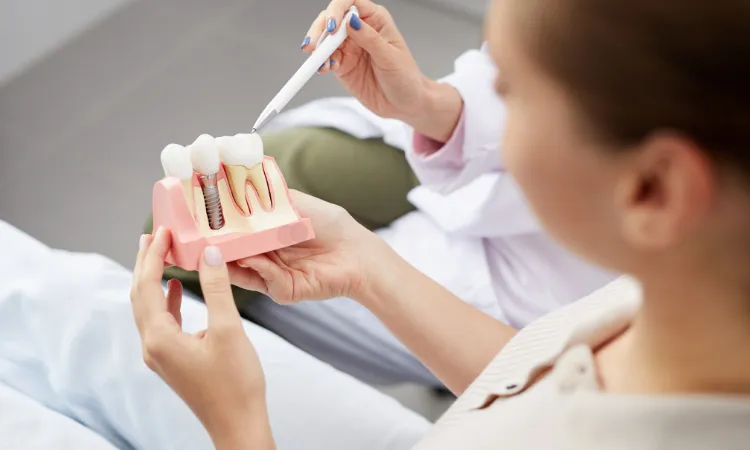
Dental implants need bone to anchor into. Wait too long, and you may not have enough bone left for an implant without a bone graft first. That’s an extra procedure, extra healing time, and extra cost.
Your Other Teeth Start to Move
Teeth aren’t fixed in place. Ligaments hold them in place, and they respond to pressure from their neighbors. When one tooth disappears, the teeth on either side start leaning into the empty space. The tooth above or below it, with nothing to bite against, starts to drift up or down.
This shifting creates a chain reaction:
- Teeth become crooked.
- Gaps open up in new places.
- Your bite changes.
- Food gets trapped where it never used to.
- Cleaning becomes harder, and cavities form in spots you can’t reach.
What starts as one missing tooth can become a mouth full of problems.
Your Face Changes Shape
Bone loss doesn’t just affect your mouth; it affects your entire facial structure. As the jawbone shrinks, your lips lose support. Your cheeks hollow out. The lower third of your face gets shorter. You start looking older than you are.
Dentures can’t stop this either. They sit on the gums, not in the bone. Only dental implants replace the tooth root and provide the stimulation your jaw needs to stay strong.
Your Risk of Gum Disease Goes Up
Missing teeth create pockets where plaque hides. Those pockets are hard to clean, and bacteria thrive there. The gums around neighboring teeth become inflamed. Bone loss accelerates. Before long, you’re not just missing one tooth; you risk losing more.
Studies show that people who lose teeth are more likely to lose additional teeth in the years that follow. It’s a domino effect. If you do nothing, one gap leads to another.
The Cost Only Goes Up
A single implant placed soon after tooth loss is far less expensive than the same implant placed years later after bone grafting, gum treatment, and orthodontic correction. Waiting doesn’t save money. It multiplies the bill.
The same goes for time. Early replacement means fewer appointments, less healing, and a simpler procedure. Late replacement means more of everything, except bone.
Restore Your Smile Today
A missing tooth isn’t a small problem. It’s a countdown. Every month you wait, your jaw shrinks a little more. Your teeth shift a little farther. Your bite changes a little worse. And the fix gets a little harder.
Dr. Dhara Patel at Best Dental Spa has seen what happens when patients wait too long. She’s also seen how beautifully things turn around when they act.
Call Best Dental Spa today to schedule your implant consultation. Whether it’s been six months or six years, there’s still a path forward. But the sooner you start, the easier that path will be. Don’t let one missing tooth lead to many more.